Wednesday, 4 September 2013

Dante's Inferno, Canto 1

Dante's The Divine Comedy has exercised the imagination of poets, artists, historians, theologians, lovers of literature and lovers of poetry for the past seven centuries. Numerous English translations have appeared since Henry Carey published the first widely circulated English translation in the early 1800s. William Blake was so moved by Carey's translation that he spent the last years of his life teaching himself Italian so as to work directly with Dante's text. During the final year of his life, Blake worked relentlessly on a series of watercolour illustrations for The Divine Comedy. The Victorian Arts Centre in Melbourne currently houses 36 of those watercolours.

It has been long recognised by poets that the greater power within poetry manifests more strongly in the hearing rather than in the reading. This has ever been the way since the Greek rhapsodei sang the memory of their Homeric epics through the centuries.

With this in mind, the present posting offers a trance voicing, with accompanying text, of the first canto of Dante's immortal Inferno, the first book of The Divine Comedy. T.S. Eliot wrote in 1929: "Dante and Shakespeare divide the modern world between them; there is no third." Most of us are familiar with at least some of Shakespeare's works. It is hoped that this presentation will help to make the timeless mastery of Dante Alighieri more accessible to an English-speaking audience.


Canto 1 of Dante's Inferno can be streamed using the media player above. A CD quality audio file is also available for download here.

[Audio and text for Canto 2 can be accessed here.
Audio and text for Canto 3 can be accessed here.]

PRODUCTION NOTES

Music:
Doc & Lena Selyanina:  Neptune (Internet Archive)
                                   Wanderer (Internet Archive) 
(Remix: vincentd)

Effects:
Rhapsodize: Crickets (Freesound)
Manda_g: Owl (Freesound)
Soundbytez: African Lion (Freesound)
Viorelvio: Wolf howl (Freesound)

Voice: 
Vincent Di Stefano


The Story


The Divine Comedy (La Divina Commedia) was written by the Florentine poet and political activist Dante Alighieri over a twenty year period after he was banished from Florence by his political enemies in 1301. He remained in exile for the remainder of his life.

The Divine Comedy is in essence a poem of transformation. It tracks the progression of the soul from a state of immersion in ignorance, desire and passion to one of progressive awakening and transcendental insight. This process is described allegorically as Dante journeys through the realms of Hell (Inferno), Purgatory (Purgatorio), and Heaven (Paradiso).

The first canto of the Inferno both sets the scene and anticipates the full scope of the immense narrative encompassed in The Divine Comedy. It begins midway in Dante's life, a turning point when he realises that he has lost his way. As he tries to find a clear path out of the morass, he serially encounters three wild beasts, a leopard, a lion, and a wolf. These are variously deemed by most commentators to be allegorical representations of the wild and uncontrollable impulses that can distort our lives and relationships. Their presence makes it impossible for him to proceed out of his entangled darkness.

At the point of greatest despair, Dante encounters a shadowy figure who reveals himself to be the ghost of his beloved poet from ancient Roman, Virgil. Dante is reassured by Virgil's obvious familiarity with both the terrain and the nature of the obstacles that confront him.

One of the consistent elements of the Inferno - and in fact the whole of The Divine Comedy - is the appearance throughout the narrative of both historical and mythical characters. This aspect emerges in the opening canto of the Inferno, where Dante offers praise to his patron, Can Grande della Scala ("the great hound"), a powerful warrior and ruler of Verona from 1311 till his death in 1329. Similarly, Virgil speaks of Aeneas, Camilla, Turnus, Nisus and Euryalus, each of whom feature prominently in his own epic poem, The Aeneid.

Virgil offers to lead Dante out of the danger into which he has strayed, but lets him know from the start that they will need to travel through the realms of damnation and of purgation before arriving at the place of "the blessed ones." Virgil further relates that he cannot escort Dante through "that blessed realm" but that he will there meet "one more worthy than myself to guide you" thus alluding to the later appearance of Beatrice.


The Poem


Inferno: Canto I

When midway on the course of our life’s journey,
I found myself within a glooming forest
Lost alone with no clear path before me.

To tell of how it was now tests me sorely
To speak of that dark forest wild and glooming
The thought of which still grips my mind with fear.

So bitter was it death is hardly worse
But to better speak of the good I found therein
I now will tell of other things I saw.

I cannot say how there I came to be
So full of sleep and sloth had I become
Through leaving far behind the ways of truth.

But soon I came upon a sloping hill
Arising from the end of the dark valley
That had so seized my heart with fear and dread.

I looked upon its heights, and saw its shoulder
Newly mantled with the beams of the bright sun
That has ever guided travellers on their way.

And then the fear that had so chilled the waters
Of my heart all through that night of deadly terror
Began to melt as frost turns into dew.

And like a man who hauls himself exhausted
From a wild and foaming sea to welcome sand
Looks back upon the peril that near took him,

So too my soul, even while still fleeing,
Stared back upon the path now well behind me
That none before had passed through and yet lived.

Now having paused to rest my weary body
I turned again to climb that stony slope
The lower foot placed firmly with each step.

But even as I started I was startled
A leopard light-of-foot and moving swiftly
With skin all sleek that sparkled like the night


Did stop me in my tracks and held me firmly
I had no way of going any further
My racing mind thought only of retreat.

The lightened sky held promise of a morning
As the rising sun moved slow through constellations
Of the ancient stars with which it had long travelled

Since love divine first moved those wondrous spheres.
This brought new hope, despite the dire presence
Of the shining panther with its flashing pelt

In that early hour and in that gentle season.
But hope was crushed when terror then reclaimed me
As a mighty lion suddenly appeared.

It approached me with so menacing a presence
With head held high and with such rabid hunger
That the air itself did seem to shake and quiver.

And then a wolf, more gaunt than all the others
All lean and taut, skeletal in her bearing
Who many a life had claimed and torn asunder.

Her very presence paralysed my mind
The sight of her so froze my limbs with fear
I lost all hope of crossing to the heights.

And who among those having gained great wealth
Confronted with the loss of all they own
Would not bewail and weep their fallen fate?

So too felt I before that restless beast
From which I slow and steadily retreated
Into the dark and sun-abandoned forest. 

And as I languished in that wretched place of woe
A presence faint took form before my eyes
And seemed to whisper hoarsely in the silence.

When I finally descried him in that wasteland
I called out loud: “Have mercy on my soul
Whether you be man or shade from Hades!”

And he replied: “No man am I like you
Though man I was, a son of Lombardy
My parents being citizens of Mantova.
 
I was born late in the reign of emperor Julius
And lived in Rome under the good Augustus
During the time of false and lying gods.

I was poet then and sang of great Aeneas,
The son of Anchises who fled from Troy
As Ilion the proud burned up behind him.

But why do you turn back? Why are you not
Now climbing the bright hill that stands before you
Which is the source of all delight and joy?”

All shy with blushing face I asked of him,
“Are you then the fountain-mouth-ed Virgil,
From whom has flowed forth mighty tides of verse?

Most radiant and clear of all of the poets,
Now bring to full fruition the great love
That carried me through your heroic verses.

For long you were my master and my mentor.
From you alone I learned that sweet new style
That brought me to such honoured acclamation.

Can you not now see the fearsome beast
That has cast me back and made my pulse atremble?
Beloved sage, I know that you can help me.”

Seeing my tears, he then softly answered:
“There is another path that you must take
To leave behind this place of desolation,

For the beast that holds you in its grip of terror
Will not allow that any pass beyond her
But will destroy the life of all who test her.

And her nature is so violent and so vicious
That even filled with those she has devoured
Her hunger rages wilder than before.

She has satisfied the lusts of packs of wolves
And seeks to draw yet others till that day
When the great hound comes to tear her life asunder.

He will not eat the fruits of earth or metal
But will take his feed from valour, love and wisdom,
And his reign will range from citadel to stable.

He will bring much needed healing to our land
Poor Italy for which Cammilla died
As too did Turnus, Nisus, and Euryalus.

He will hunt this blood-crazed wolf through every village
Until he casts her back into the hell
From which she did so envious emerge.

So I think it best that you now follow me,
As I will serve you as your faithful guide
And lead you onward to a place eternal.

And there you’ll hear the screams of great despair
And there you’ll see the old tormented spirits
Who wish only to die a second death.

But after that you will see the hopeful souls
Who rest within the flames in the great hope
That they will come one day to join the blessed ones.

And should you wish to rise to where they are,
Into that blessed realm, then I must leave you
With one more worthy than myself to guide you.

For the King who reigns therein will not allow
The rebel who I am to stand before him
Or ever deign to walk his streets of splendour.

He is the King of all, and there his kingdom
Shines bright around his jewelled throne of glory.
How great the joy of those that he has chosen!”

I said to him: “I ask you now my poet
In the name of that one God you never knew
To help me flee the evils that assail me,

And guide me through the places that await us,
Through the realms of lost and sad and suffering souls  
To reach at last the gate of great Saint Peter.

He rose and strode ahead.
And I followed close behind.

[translated by Vincent Di Stefano]


Tuesday, 6 August 2013

We Do It Differently These Days

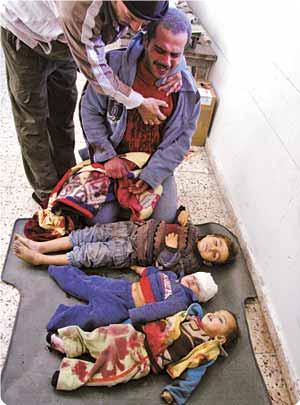
Phosphorus bombs over Gaza. January 2009
As a sonic memorial posted on Hiroshima Day 2013, this original piece offers a reflection on the obscenity of aerial warfare.


It poetically addresses the atomic slayings of the inhabitants of Hiroshima and Nagasaki in August 1945, the selective annihilation of Iraq by George Bush Sr. in January and February 1991 and the more complete destruction of Iraqi society launched by his son George W. Bush in 2003. It also reflects on the nature of the assaults upon Lebanon conducted by the Israeli military in 2006 and 2008, and on the inhabitants of Gaza in January 2009 and November 2012.


 The music that accompanies We Do It Differently These Days was composed and performed by Nico Di Stefano.


We Do It Differently These Days can be streamed using the media player above. A CD quality mp3 file is available for download here.

The Poem


We Do It Differently these Days

We do it differently these days
Faultless execution by clever machines
All done at a safe distance

But fault lines form
And lines of logic now fail
The surgical strike has become a woeful massacre

Neither breath nor bone remained
When the fire of those two suns
Atomised all in the furious core

And at the margins
We beheld the new flaying
It hung in strips from wailing women and burning men

We do it differently these days
We break the roads and burst the mains
We foul the water and choke the air
We seed the earth with deadly fire
We burn the future of young mothers

Saturday, 27 April 2013

After the Tempest (Finding Family)

William Blake, "The Meeting of a Family" 
This short poem builds on a personal reflection on the nature of enduring relationship during a time characterised by the prevalence of divided households.

The poem carries an acknowledgement of the tensions and the difficulties that inevitably arise within the context of marriage while also giving voice to the deeper treasures that can emerge in the living of a sustained commitment to another.

The music that accompanies Finding Family was composed and performed by Nico Di Stefano.


Finding Family can be streamed using the media player above. A CD quality mp3 audio file is available for download here.


The Poem


Finding Family

Let us now look beyond the obvious
And tend to the subtle and the silent
This world too full of empty noise and useless purpose
I call out to your generations
I know these shades well

Perhaps the point too strong
The light too bright
Too soon to dive so deep
Better then to wait again and turn aside
Until the tide more gently turns

This pearl is safe
Until the divers come

Flooding tears wailing walls
Streams of unmet longing gush and rush around
No sorry word can compass this
Our fields and currents sundered through
But still I call in silent breath
And whirl in loving storm around you

This time now opens once again
As you and I conjoined become
The loving daughter, loving son
Brother strong and sister true
Born of love and me and you

Wednesday, 27 March 2013

Son of the Sun. A Song of Easter

 
Heinrich Hofman, Christ at 33 (1889)
This original poem invites both a reflection on and a remembrance of the life, death and resurrection of Jesus of Nazareth during a time of turbulence when all human values have been hurled to the elements.

The music that accompanies this piece was composed and performed by Nico Di Stefano


Son of the Sun can be streamed using the media player above. A CD quality mp3 audio file is available for download here.


The Poem


Son of the Son

A Song of Easter


We did not know that blood could shine through thorns
That air could erupt in rays and points of light,
Forms of fine flame appearing and then vanishing around you

Son of the Sun, Son of Man
You show your face again and again
In these days of passion, compassion and pain
These days of fire and storm and shame
To all who would call you by your name.

In forest on sea and in desert dry
You walked and waited and then turned around.
Those who heard your story, who saw your glory
Will never lose sight of your many faces,
In trance and wonder, in crystalline graces.

Perfect pearl reflects and refracts
In changing hues in reds and blues
The places and faces now fixed in time.
Within this sphere of earth sublime
The stories untold, in silver and gold,
The present and past, the first and the last.

Now the stone rolled over to close the wound
Of an earth long seeded with blood and grief
Restored in love renewed in light
With a thief to the left and a thief to the right
With blood run thin with day become night.

To you who once were who are and will be
To you who were emptied of blood and of water
Remember the land and the sky and the sea
And strengthen and comfort the sons and the daughters
Yet to return to our great mother Earth
To restore and renew and to bring to new birth.


Thursday, 17 January 2013

Edwin Arlington Robinson. The Man Against the Sky

American poet Edwin Arlington Robinson was born just after the time of the Civil War and lived to see the dramatic transformation of the world he was born into through the influence of so-called Enlightenment philosophies and the development of early industrial technologies. Like William Blake before him, he came to perceive at an early age the destructive effects of new forms of power made available by the actions of big government, big business and big industry.

The Man Against the Sky was written in 1916 at a time when all informed citizens in the Western world had begun to grasp the immensity of destruction wrought by political will and the new machineries of death unleashed during the First World War. As a poet, Robinson was also deeply conscious of a widespread devaluation of human life and a growing dismissal of the more subtle dimensions of human experience as encompassed by such terms as soul and spirit.

Among other things, this dramatic poem carries Robinson's impassioned response to the growing worship of science and scientism and the widespread negation of any transcendent meaning to human life by those who at that time espoused and vociferously promoted a materialist view of life.

Although written nearly a century ago, Robinson's depth of questioning continues to resonate into the present time when the philosophical and existential divides as articulated in this poem have, if anything, deepened further.

The Man Against the Sky can be streamed using the media player below. A CD quality audio file is also available for downloading here


NOTES
 

Voice: vincentd
Music: Doc and Lena Selyanina, "Lofoten"
(Remix: vincentd)


With many thanks to Doc and Lena Selyanina who have so generously made available their creative and highly individuated music.


THE POEM


The Man Against the Sky


Between me and the sunset, like a dome
     Against the glory of a world on fire,
     Now burned a sudden hill,
     Bleak, round, and high, by flame-lit height made higher,
     With nothing on it for the flame to kill
     Save one who moved and was alone up there
     To loom before the chaos and the glare
     As if he were the last god going home
     Unto his last desire.
     Dark, marvelous, and inscrutable he moved on
     Till down the fiery distance he was gone, -
     Like one of those eternal, remote things
     That range across a man's imaginings
     When a sure music fills him and he knows
     What he may say thereafter to few men, -
     The touch of ages having wrought
     An echo and a glimpse of what he thought
     A phantom or a legend until then;
     For whether lighted over ways that save,
     Or lured from all repose,
     If he go on too far to find a grave,
     Mostly alone he goes.

     Even he, who stood where I had found him,
     On high with fire all round him, -
     Who moved along the molten west,
     And over the round hill's crest
     That seemed half ready with him to go down,
     Flame-bitten and flame-cleft, -
     As if there were to be no last thing left
     Of a nameless unimaginable town, -
     Even he who climbed and vanished may have taken
     Down to the perils of a depth not known,
     From death defended though by men forsaken,
     The bread that every man must eat alone;
     He may have walked while others hardly dared
     Look on to see him stand where many fell;
     And upward out of that, as out of hell,
     He may have sung and striven
     To mount where more of him shall yet be given,
     Bereft of all retreat,
     To sevenfold heat, -
     As on a day when three in Dura shared
     The furnace, and were spared
     For glory by that king of Babylon
     Who made himself so great that God, who heard,
     Covered him with long feathers, like a bird.

     Again, he may have gone down easily,
     By comfortable altitudes, and found,
     As always, underneath him solid ground
     Whereon to be sufficient and to stand
     Possessed already of the promised land,
     Far stretched and fair to see:
     A good sight, verily,
     And one to make the eyes of her who bore him
     Shine glad with hidden tears.
     Why question of his ease of who before him,
     In one place or another where they left
     Their names as far behind them as their bones,
     And yet by dint of slaughter toil and theft,
     And shrewdly sharpened stones,
     Carved hard the way for his ascendency
     Through deserts of lost years?
     Why trouble him now who sees and hears
     No more than what his innocence requires,
     And therefore to no other height aspires
     Than one at which he neither quails nor tires?
     He may do more by seeing what he sees
     Than others eager for iniquities;
     He may, by seeing all things for the best,
     Incite futurity to do the rest.

     Or with an even likelihood,
     He may have met with atrabilious eyes
     The fires of time on equal terms and passed
     Indifferently down, until at last
     His only kind of grandeur would have been,
     Apparently, in being seen.
     He may have had for evil or for good
     No argument; he may have had no care
     For what without himself went anywhere
     To failure or to glory, and least of all
     For such a stale, flamboyant miracle;
     He may have been the prophet of an art
     Immovable to old idolatries;
     He may have been a player without a part,
     Annoyed that even the sun should have the skies
     For such a flaming way to advertise;
     He may have been a painter sick at heart
     With Nature's toiling for a new surprise;
     He may have been a cynic, who now, for all
     Of anything divine that his effete
     Negation may have tasted,
     Saw truth in his own image, rather small,
     Forbore to fever the ephemeral,
     Found any barren height a good retreat
     From any swarming street,
     And in the sun saw power superbly wasted;
     And when the primitive old-fashioned stars
     Came out again to shine on joys and wars
     More primitive, and all arrayed for doom,
     He may have proved a world a sorry thing
     In his imagining,
     And life a lighted highway to the tomb.

     Or, mounting with infirm unsearching tread,
     His hopes to chaos led,
     He may have stumbled up there from the past,
     And with an aching strangeness viewed the last
     Abysmal conflagration of his dreams, -
     A flame where nothing seems
     To burn but flame itself, by nothing fed;
     And while it all went out,
     Not even the faint anodyne of doubt
     May then have eased a painful going down
     From pictured heights of power and lost renown,
     Revealed at length to his outlived endeavor
     Remote and unapproachable forever;
     And at his heart there may have gnawed
     Sick memories of a dead faith foiled and flawed
     And long dishonored by the living death
     Assigned alike by chance
     To brutes and hierophants;
     And anguish fallen on those he loved around him
     May once have dealt the last blow to confound him,
     And so have left him as death leaves a child,
     Who sees it all too near;
     And he who knows no young way to forget
     May struggle to the tomb unreconciled.
     Whatever suns may rise or set
     There may be nothing kinder for him here
     Than shafts and agonies;
     And under these
     He may cry out and stay on horribly;
     Or, seeing in death too small a thing to fear,
     He may go forward like a stoic Roman
     Where pangs and terrors in his pathway lie, -
     Or, seizing the swift logic of a woman,
     Curse God and die.

     Or maybe there, like many another one
     Who might have stood aloft and looked ahead,
     Black-drawn against wild red,
     He may have built, unawed by fiery gules
     That in him no commotion stirred,
     A living reason out of molecules
     Why molecules occurred,
     And one for smiling when he might have sighed
     Had he seen far enough,
     And in the same inevitable stuff
     Discovered an odd reason too for pride
     In being what he must have been by laws
     Infrangible and for no kind of cause.
     Deterred by no confusion or surprise
     He may have seen with his mechanic eyes
     A world without a meaning, and had room,
     Alone amid magnificence and doom,
     To build himself an airy monument
     That should, or fail him in his vague intent,
     Outlast an accidental universe -
     To call it nothing worse -
     Or, by the burrowing guile
     Of Time disintegrated and effaced,
     Like once-remembered mighty trees go down
     To ruin, of which by man may now be traced
     No part sufficient even to be rotten,
     And in the book of things that are forgotten
     Is entered as a thing not quite worth while.
     He may have been so great
     That satraps would have shivered at his frown,
     And all he prized alive may rule a state
     No larger than a grave that holds a clown;
     He may have been a master of his fate,
     And of his atoms, - ready as another
     In his emergence to exonerate
     His father and his mother;
     He may have been a captain of a host,
     Self-eloquent and ripe for prodigies,
     Doomed here to swell by dangerous degrees,
     And then give up the ghost.
     Nahum's great grasshoppers were such as these,
     Sun-scattered and soon lost.

     Whatever the dark road he may have taken,
     This man who stood on high
     And faced alone the sky,
     Whatever drove or lured or guided him, -
     A vision answering a faith unshaken,
     An easy trust assumed of easy trials,
     A sick negation born of weak denials,
     A crazed abhorrence of an old condition,
     A blind attendance on a brief ambition, -
     Whatever stayed him or derided him,
     His way was even as ours;
     And we, with all our wounds and all our powers,
     Must each await alone at his own height
     Another darkness or another light;
     And there, of our poor self dominion reft,
     If inference and reason shun
     Hell, Heaven, and Oblivion,
     May thwarted will (perforce precarious,
     But for our conservation better thus)
     Have no misgiving left
     Of doing yet what here we leave undone?
     Or if unto the last of these we cleave,
     Believing or protesting we believe
     In such an idle and ephemeral
     Florescence of the diabolical, -
     If, robbed of two fond old enormities,
     Our being had no onward auguries,
     What then were this great love of ours to say
     For launching other lives to voyage again
     A little farther into time and pain,
     A little faster in a futile chase
     For a kingdom and a power and a Race
     That would have still in sight
     A manifest end of ashes and eternal night?
     Is this the music of the toys we shake
     So loud, - as if there might be no mistake
     Somewhere in our indomitable will?
     Are we no greater than the noise we make
     Along one blind atomic pilgrimage
     Whereon by crass chance billeted we go
     Because our brains and bones and cartilage
     Will have it so?
     If this we say, then let us all be still
     About our share in it, and live and die
     More quietly thereby.

     Where was he going, this man against the sky?
     You know not, nor do I.
     But this we know, if we know anything:
     That we may laugh and fight and sing
     And of our transience here make offering
     To an orient Word that will not be erased,
     Or, save in incommunicable gleams
     Too permanent for dreams,
     Be found or known.
     No tonic and ambitious irritant
     Of increase or of want
     Has made an otherwise insensate waste
     Of ages overthrown
     A ruthless, veiled, implacable foretaste
     Of other ages that are still to be
     Depleted and rewarded variously
     Because a few, by fate's economy,
     Shall seem to move the world the way it goes;
     No soft evangel of equality,
     Safe cradled in a communal repose
     That huddles into death and may at last
     Be covered well with equatorial snows -
     And all for what, the devil only knows -
     Will aggregate an inkling to confirm
     The credit of a sage or of a worm,
     Or tell us why one man in five
     Should have a care to stay alive
     While in his heart he feels no violence
     Laid on his humor and intelligence
     When infant Science makes a pleasant face
     And waves again that hollow toy, the Race;
     No planetary trap where souls are wrought
     For nothing but the sake of being caught
     And sent again to nothing will attune
     Itself to any key of any reason
     Why man should hunger through another season
     To find out why 'twere better late than soon
     To go away and let the sun and moon
     And all the silly stars illuminate
     A place for creeping things,
     And those that root and trumpet and have wings,
     And herd and ruminate,
     Or dive and flash and poise in rivers and seas,
     Or by their loyal tails in lofty trees
     Hang screeching lewd victorious derision
     Of man's immortal vision.

     Shall we, because Eternity records
     Too vast an answer for the time-born words
     We spell, whereof so many are dead that once
     In our capricious lexicons
     Were so alive and final, hear no more
     The Word itself, the living word no man
     Has ever spelt,
     And few have ever felt
     Without the fears and old surrenderings
     And terrors that began
     When Death let fall a feather from his wings
     And humbled the first man?
     Because the weight of our humility,
     Wherefrom we gain
     A little wisdom and much pain,
     Falls here too sore and there too tedious,
     Are we in anguish or complacency,
     Not looking far enough ahead
     To see by what mad couriers we are led
     Along the roads of the ridiculous,
     To pity ourselves and laugh at faith
     And while we curse life bear it?
     And if we see the soul's dead end in death,
     Are we to fear it?
     What folly is here that has not yet a name
     Unless we say outright that we are liars?
     What have we seen beyond our sunset fires
     That lights again the way by which we came?
     Why pay we such a price, and one we give
     So clamoringly, for each racked empty day
     That leads one more last human hope away,
     As quiet fiends would lead past our crazed eyes
     Our children to an unseen sacrifice?
     If after all that we have lived and thought,
     All comes to Nought, -
     If there be nothing after Now,
     And we be nothing anyhow,
     And we know that, - why live?
     'Twere sure but weaklings' vain distress
     To suffer dungeons where so many doors
     Will open on the cold eternal shores
     That look sheer down
     To the dark tideless floods of Nothingness
     Where all who know may drown.